Agrivoltaics in general
Agrivoltaics is the practice of integrating solar photovoltaic energy generation with agricultural activities. A growing body of research has demonstrated that both shade-tolerant[1] crops and crops requiring full sun[2] can be grown effectively with panels placed at a suitable density and height relative to crop rows. Apart from combining energy and food production, agrivoltaic panels can significantly reduce water inputs in the summer via soil shading[3]; in some water input requirements were reduced 20%-30% in some cases[4]. In the rainy season, we are interested in how the mechanical structure of the agrivoltaic array and the on-site distributed power access it makes available can help manage the flow of water over the field, thus protecting crops and soil from concentrated rain events such as atmospheric rivers.
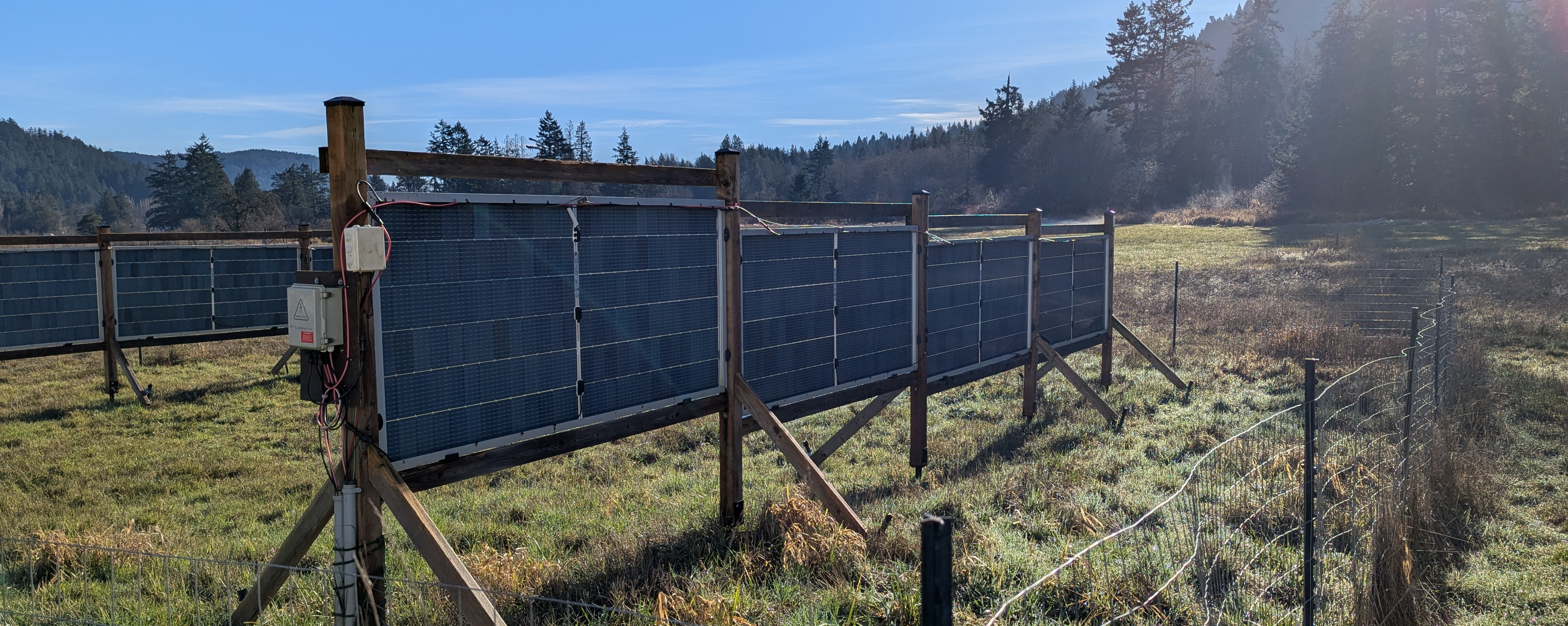
Vision for Community Agrivoltaics
All communities need reliable access to food, energy and water. Under stresses from a changing climate and legacies of ecological mismanagement and abuse, communities worldwide are searching for ways to restore ecological health and function while still producing the food, energy and water required. Building on the distributed scalability of rooftop solar which makes dual use of existing architectural structure for power generation, we seek to add to the growing body of evidence that establishes how solar production can be scaled via integration with agronomic sites. Our fundamental thesis is that placing decision-making agency in the hands of local communities can provide both an ethically and technologically scalable framework for sustainable communities.
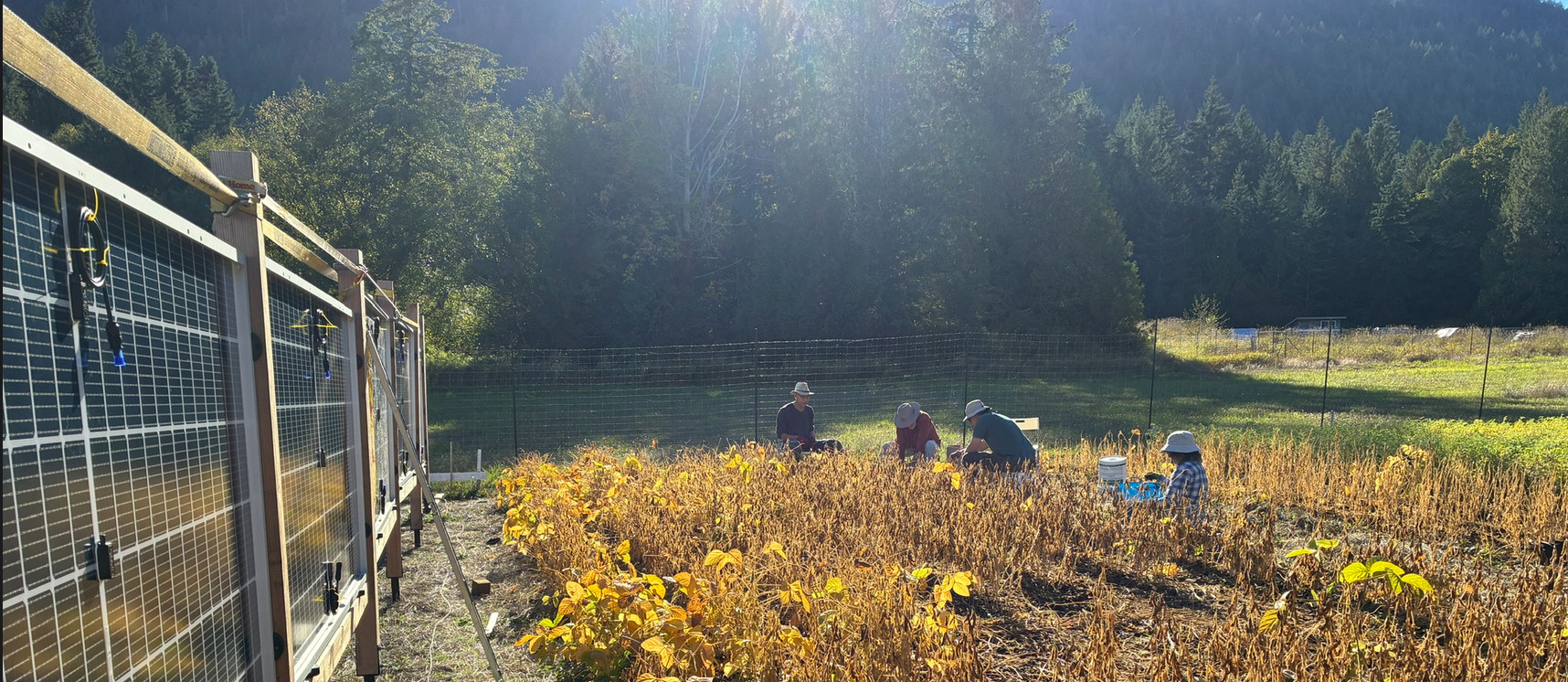
Agrivoltaics and water stress in the southern Gulf Islands
A fundamental effect of the global increase in atmospheric temperature is that more water is stored throughout the year in the atmosphere as vapor. This in turn leads to more extended droughts in the summer and more extreme precipitation events in the winter. Our research thus seeks to closely investigate the way water can be integrated alongside energy and food production.
Drought risk - In contrast to most of British Columbia and the Pacific Northwest region in general, the southern Gulf Islands do not have a seasonal store of water in the form of mountain snowpack. For this reason the islands have always faced the risk of water shortages in the summer, with the situation growing in risk as climate change advances. Playing off existing results, we are developing local studies of what water savings are possible from agrivoltaic shade directly. Additionally, we are considering that any ponds, swales, or other storage features that hold water on the landscape can be more flexibly located when we have on on-site solar array providing power for pumped water vs. relying on gravity fed.
Flood risk - when precipitation is concentrated enough to wash over soil rather than infiltrating soil significant the agricultural potential of the soil can be severely compromised. Our current research includes considers way of using the array built structure to divert water, using the narrow strip of land at base of the array to act as water diversion or swaling, and using the electricity for the array to support any pumping needed during extreme precipitation events.
References
[1]: Marrou, H., Guilioni, L., Dufour, L., Dupraz, C., Wery, J. (2013). "Microclimate under agrivoltaic systems: Is crop growth rate affected in the partial shade of solar panels?". Agricultural and Forest Meteorology, 177, 117-132.
[2]: Sekiyama, T., Nagashima, A. (2019). "Solar sharing for both food and clean energy production: Performance of agrivoltaic systems for corn, a typical shade-intolerant crop". Environments, 6(6), 65.
[3]: Barron-Gafford, G. A., Pavao-Zuckerman, M. A., Minor, R. L., Sutter, L. F., Barnett-Moreno, I., Blackett, D. T., Macknick, J. E. (2019). "Agrivoltaics provide mutual benefits across the food energy water nexus in drylands". Nature Sustainability, 2(9), 848-855.
[4]: Elamri, Y., Cheviron, B., Lopez, J. M., Dejean, C., Belaud, G. (2018). "Water budget and crop modelling for agrivoltaic systems: Application to irrigated lettuces". Agricultural water management, 208, 440-453.